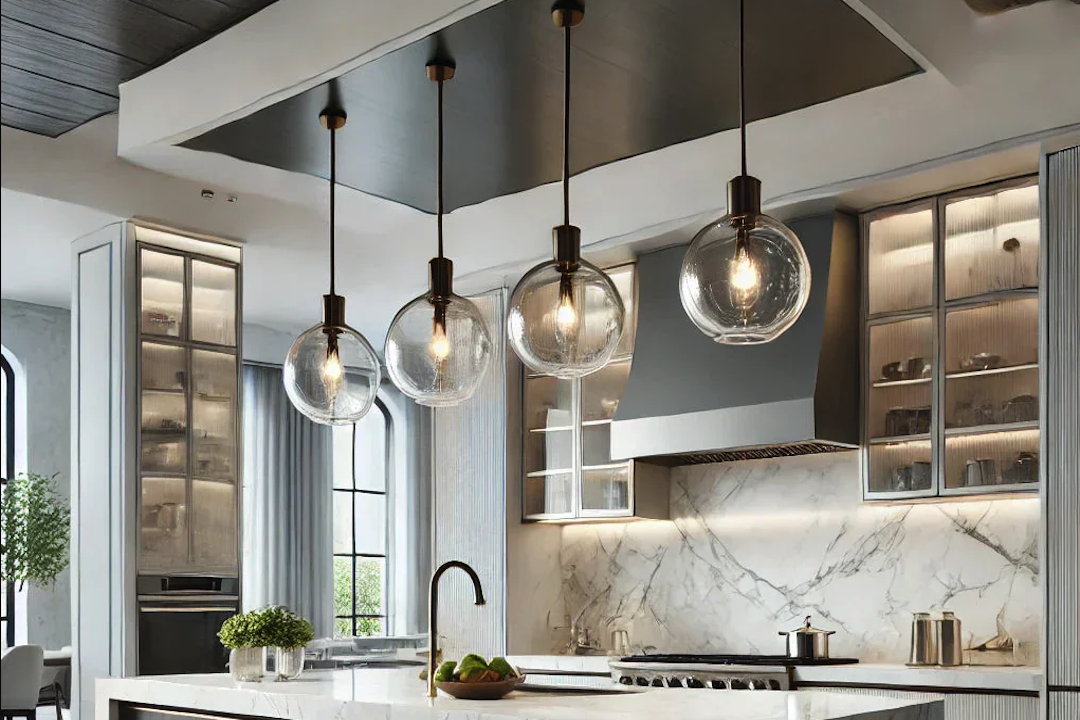
Thinking about upgrading your kitchen island with some sleek glass pendant lights? You’re in luck! These fixtures are a fantastic way to inject a touch of modern elegance into a minimalist kitchen, offering both practical illumination and a subtle design statement.
The Allure of Sleek Glass Pendants for Minimalist Kitchens
Minimalist kitchens are all about clean lines, uncluttered spaces, and a focus on functionality. The decor aims for a sense of calm and order, letting the materials and the space itself shine. This is precisely where sleek glass pendant lights Dililamp come into their own. They don’t scream for attention, but rather complement the existing aesthetic, acting as refined accents that enhance the overall design.
The “sleek” aspect refers to their often streamlined silhouettes – think smooth curves, simple cylinders, or elegant teardrops. The “glass” element is key; it allows light to diffuse softly, creating a warm and inviting atmosphere without harsh glare. When hung above a kitchen island, an area that is often the heart of the home and a focal point, these pendants become more than just light sources; they’re integral design components that elevate the entire space. They offer a delicate balance between form and function, a core principle of minimalist design.
The Practicality of Pendant Lights Over Kitchen Islands
Kitchen islands aren’t just for prep work anymore. They’re often used for casual dining, homework sessions, socializing, and even as a workspace. This means they need excellent task lighting. Pendant lights are perfectly positioned to deliver this.
Why Pendants Work So Well for Task Lighting
- Focused Illumination: Their downward facing nature directs light precisely where you need it, whether you’re chopping vegetables, reading a recipe, or enjoying a meal. This is crucial for a functional kitchen.
- Reducing Glare: The right kind of glass shade can diffuse light, preventing direct glare on countertops or when looking at the island surface. This makes working and dining more comfortable.
- Defining the Space: Even without being on, the presence of pendant lights above an island visually anchors this area. When illuminated, they further define the island as a distinct zone within the kitchen.
Avoiding Common Lighting Pitfalls
- Too Bright or Too Dim: The goal is adequate light without overwhelming the senses. This is where dimmable options and thoughtful bulb selection become important.
- Harsh Shadows: A single, overly focused light can create stark shadows. Multiple pendants or a wider shade can help distribute light more evenly.
- Clutter: In a minimalist kitchen, lighting should enhance, not contribute to visual clutter. Sleek designs help with this.
Choosing the Right Sleek Glass Pendant Style
The world of sleek glass pendant lights is diverse, and the “sleek” descriptor can encompass a range of forms. The key is to find a design that aligns with your specific minimalist vision.
Understanding Different Glass Types and Finishes
The type of glass used significantly impacts the light it emits and the overall aesthetic.
- Clear Glass: This offers the most unobstructed view of the bulb and a bright, direct light. It’s excellent for showcasing decorative Edison-style bulbs and maintaining a sense of openness. Clear glass is inherently minimalist, letting the light and bulb design be the stars.
- Frosted Glass: This diffuses light beautifully, creating a softer, more ambient glow. It’s great for disguising less aesthetically pleasing bulbs and reducing glare. Frosted glass adds a layer of gentle diffusion, perfect for creating a serene atmosphere.
- Smoked or Tinted Glass: These add a touch of sophistication and can introduce subtle color. Smoked glass, often in grey or amber tones, can soften the light and provide a bit of mystery. Tinted glass offers a more pronounced color effect.
- Ribbed or Textured Glass: While still maintaining a sleek profile, subtle textures like vertical ribbing can add a touch of visual interest and break up the light in appealing ways. This offers a sophisticated detail that doesn’t disrupt the minimalist flow.
- Milk Glass/Opal Glass: This opaque glass provides a very soft, even illumination. It’s excellent for a uniform, diffused light and a clean, contemporary look. It’s a classic minimalist choice for its consistent and gentle light output.
Shape and Silhouette Considerations
Beyond the glass itself, the form of the pendant plays a crucial role.
- Cylindrical Pendants: These are perhaps the epitome of sleek. Their straight lines and uniform shape fit perfectly into a minimalist scheme. They can be hung individually for a modern statement or in a linear row for balanced illumination. Their upright form draws the eye upwards, adding to the perception of vertical space.
- Teardrop or Bell-Shaped Pendants: These offer a slightly softer, more organic take on sleekness. Their gentle curves can add a touch of subtle elegance without compromising the minimalist ideal. They often have a wider opening at the bottom, providing excellent downward light.
- Conical or Drum Pendants: These provide a clean, geometric aesthetic. A cone can be striking, while a drum offers a more substantial, yet still streamlined, presence. They often have a consistent width, creating a sense of order and balance.
- Mini Bell or Globe Pendants: For smaller islands or when you want a more delicate touch, small, simple globes or mini bells offer understated charm. They can be clustered or spaced out, providing flexibility in design.
Strategic Placement and Sizing for Maximum Impact
The beauty of pendant lights is very much in their placement. Getting this right is crucial for both function and aesthetic harmony.
Determining the Ideal Height
The height of your pendant lights is probably the most critical factor for both aesthetics and functionality.
- Clearance for Movement: The primary consideration should be to ensure there’s enough head clearance for people to move around the island comfortably, especially if someone might stand at the island with their arms raised. A general rule of thumb is to hang them at least 30-36 inches above the countertop.
- Visual Balance: The height also affects how the pendants relate to the rest of your kitchen. If they’re too high, they can look lost. Too low, and they can feel oppressive. Experimentation and considering the scale of your kitchen and island are key.
- Light Distribution: The closer the light source to your work surface, the more concentrated the illumination. Hanging them a bit higher can allow for a gentler spread of light across the entire island.
Sizing Your Pendants to Your Island
The size of your pendants should be in proportion to the size of your kitchen island. Overly large pendants can overwhelm a small island, while too-small ones can look insignificant on a large one.
- Rule of Thumb for Spacing: A common guideline is to leave 25-30 inches of space between the edges of pendant lights and any obstructions (like the edge of the island). Also, ensure about 24-30 inches of space between the pendants themselves when hanging multiples.
- Island Width and Pendant Diameter: For a single pendant, its diameter should generally be about one-third to one-half the width of your island. For multiple pendants, consider the overall visual weight and how much space they occupy. If your island is 3 feet wide, pendants with diameters of around 10-12 inches are often a good starting point.
- Visual Weight: Think about the perceived “heaviness” of the pendants. Clear glass will feel lighter than frosted or milk glass, allowing you to potentially use slightly larger fixtures without them feeling overwhelming.
The Power of Groupings: Single vs. Multiple Pendants
The decision to hang one, two, or even three pendants is a stylistic one with practical implications.
- The Single Statement Piece: For very long, narrow islands, a single, striking pendant can be a powerful focal point. This works best when the pendant itself has a strong design or a substantial size. It simplifies the look further, which is ideal for ultra-minimalist designs.
- The Classic Pair: Two pendants are a very popular and stylish choice. They offer balanced lighting and a symmetrical appeal that resonates well with many kitchen designs. Position them equidistant from the center of the island, allowing for comfortable workspace.
- The Trio: Three pendants can work well for longer islands. This offers more distributed lighting and can create a dynamic visual rhythm. However, you need to ensure sufficient spacing so they don’t feel cramped or create a cluttered look, which contradicts the minimalist ethos.
Integrating Sleek Glass Pendants Thoughtfully into Minimalist Decor
Sleek glass pendants aren’t just about the lights themselves; they’re about how they interact with the rest of your kitchen.
Complementing Materials and Finishes
The materials used in your kitchen are the foundation of its minimalist appeal. Your pendant lights should enhance these, not clash.
- Natural Wood Tones: Sleek glass pendants work beautifully with the warmth of natural wood cabinets or countertops. The contrast between the cool, smooth glass and the organic texture of wood creates visual interest without being overly busy. Clear glass can highlight the grain of the wood, while frosted glass offers a softer complement.
- Sleek Stone Surfaces: Think quartz, granite, or marble. Modern minimalist kitchens often feature these materials in clean, veined, or solid patterns. Glass pendants will echo the refined nature of stone, maintaining a cohesive and sophisticated look.
- Matte and High-Gloss Finishes: Sleek glass can harmonize with both. With matte finishes (like matte black or white cabinets), the slight sheen of glass offers a subtle textural contrast. With high-gloss finishes, the reflective quality of glass can enhance the overall shine and spaciousness of the kitchen.
- Metallic Accents: If your kitchen incorporates brushed nickel, chrome, or even matte black hardware, choose pendant lights with similar metal accents in their structure or canopy. This creates a unified and polished look.
Enhancing the Minimalist Aesthetic
Minimalism is about mindful curation. Every element should serve a purpose, either functional or aesthetic, and ideally both.
- Decluttering the Visual Field: Sleek glass pendants, especially those with clear or frosted glass, tend to appear lighter and less visually intrusive than opaque or heavily decorated fixtures. This helps maintain the uncluttered feeling that is so central to minimalist design. They create pools of light without adding visual “noise.”
- Creating Focal Points with Subtlety: Instead of a bold appliance or a busy backsplash, sleek pendants can become the subtle focal point of your island. Their clean lines and emanating light draw the eye gracefully, adding a touch of refinement without being ostentatious.
- The Role of Bulb Choice: In minimalist designs, the bulb itself can be a design element. With clear glass pendants, consider decorative LED bulbs with exposed filaments (Edison-style) for a touch of vintage-modern flair. For frosted or opaque glass, standard LED bulbs that provide good warmth and brightness are perfectly fine. Always opt for energy-efficient LED bulbs.
Lighting for Ambiance and Task
The beauty of well-chosen pendants is their duality: they provide essential task lighting while also contributing to the overall mood of the kitchen.
- Warm vs. Cool Light: For a kitchen island where people will be spending time eating and socializing, warm white light (around 2700K-3000K) is generally preferred. It promotes a cozy and inviting atmosphere. Cooler tones can be more sterile and better suited for purely functional task areas.
- Dimmable Options: This is a game-changer for minimalist kitchens. Being able to dim the pendants allows you to transition from bright task lighting for food prep to a softer, more ambient glow for evening meals or entertaining. This flexibility is key to maximizing the utility of your island.
- Layered Lighting: Pendant lights over the island are just one layer of kitchen lighting. Ensure you also have adequate ambient lighting (general room illumination) and potentially accent lighting (like under-cabinet lights) to create a well-lit and functional space.
Beyond Just Appearance: Practical Considerations for Sleek Glass Pendants
While aesthetics are paramount in minimalist design, a practical approach ensures your chosen fixtures are both beautiful and functional for years to come.
Installation and Wiring
This is where practicality truly comes into play.
- Professional Installation Recommended: Unless you have prior experience with electrical work, it’s highly advisable to hire a qualified electrician for pendant light installation. This ensures safety and compliance with building codes. Improper wiring can be a fire hazard.
- Ceiling Box Strength: Pendant lights, especially those made of glass, can have some weight. Ensure the existing ceiling electrical box is rated to support the weight of your chosen fixtures. If not, your electrician can reinforce or replace it.
- Wiring to a Switch: Most pendant light installations will be wired to a standard wall switch. Consider installing a dimmer switch for the ultimate control over light levels, as mentioned earlier. Smart home integration is also an option for remote control and scheduling.
Maintenance and Cleaning
Glass, while beautiful, can show smudges and dust.
- Gentle Cleaning: For most glass pendant lights, a soft, lint-free cloth dampened with water or a mild glass cleaner is sufficient. Avoid abrasive cleaners, as they can scratch the glass.
- Dusting Regularly: A quick dusting with a microfiber cloth every week or two will prevent dust build-up and keep your pendants looking their best.
- Access for Cleaning: Consider how easy it will be to access the pendants for cleaning, especially if they are hung at a specific height. Ensure there’s enough clearance to maneuver a small stepladder safely if needed.
Bulb Replacement and Longevity
The type of bulb you choose impacts both maintenance and energy usage.
- LED Dominance: As previously mentioned, LED bulbs are the clear winner. They use significantly less energy, last much longer than incandescent or halogen bulbs, and emit less heat, which is important for enclosed glass fixtures.
- Socket Compatibility: Ensure the bulbs you purchase are compatible with the socket type (e.g., E26, E12) in your pendant fixtures.
- Considering Future Availability: While less of a concern with standard LED sockets, if you opt for a very specific or unique bulb shape, check for its continued availability.
By carefully considering these practical aspects alongside the aesthetic appeal, you can select sleek glass pendant lights that not only elevate your minimalist kitchen island decor but also provide years of reliable beauty and functionality.