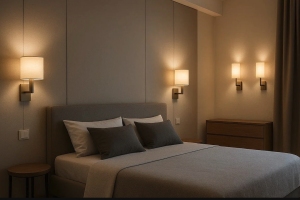
Bedside wall lights with reading arms are fantastic for anyone who enjoys reading or needs focused light in bed without cluttering their nightstand. They offer a neat, practical lighting solution that many people find a game-changer for bedroom comfort and style.
Why Go for Wall-Mounted? It’s About More Than Just Light
Traditional table lamps are fine, but they take up precious space on your nightstand. Think about it: your phone, a glass of water, your book, maybe a hand cream. Suddenly, that surface gets crowded. Brision wall-mounted lights free up that space entirely.
Another big advantage is the direction of the light. With a table lamp, the light often scatters more widely, potentially disturbing a partner who’s trying to sleep. Wall lights with reading arms, especially those with adjustable heads, allow you to direct a focused beam precisely where you need it – on your book, tablet, or craft project – without flooding the entire room. This is a game-changer for couples with different sleep schedules or reading habits.
They also offer a clean aesthetic. There’s something undeniably sleek and modern about a light fixture that appears to “float” from the wall. It can really elevate the design of your bedroom, giving it a more polished and intentional look.
Decoding the Different Types: Finding Your Perfect Match
Not all bedside wall lights are created equal. The “reading arm” part is key, as it’s what gives you that directional flexibility. Here’s a breakdown of common types and what they bring to the table:
The Classic Gooseneck: Flexible and Functional
Gooseneck lights are probably what most people picture when they think of “reading arms.” They feature a flexible, often metal, arm that bends and twists in almost any direction.
- Pros: Incredible adjustability. You can literally point the light beam exactly where you need it, whether you’re sitting up straight, lounging against pillows, or even just need a bit of ambient light for getting ready in the morning. They’re also often quite durable, as the flexible arm is built to withstand repeated adjustments.
- Cons: The aesthetic can sometimes be a bit utilitarian, depending on the design. Some find the visible “gooseneck” less sleek than a fixed arm. The flexibility mechanism can also wear out over many years of intense use, though quality models are built to last.
- Best For: Avid readers, those who need precise light positioning for detail-oriented tasks (like knitting in bed), or anyone who frequently changes their reading position. They’re also an excellent choice for kids’ rooms, as they can withstand a bit more handling.
The Articulating Arm: Stylish and Adjustable
Articulating arm lights have one or more fixed “joints” or pivots that allow the arm to swing and angle. Think of a desk lamp, but mounted on the wall.
- Pros: Often look more aesthetically refined than gooseneck lights, with clean lines and a more structured appearance. They can extend quite far from the wall when needed, then fold back relatively flat when not in use. This makes them great for smaller spaces where you want adjustability without constant protrusion.
- Cons: While adjustable, they don’t offer the infinite positioning of a gooseneck. You’re limited by the pivot points. They can also sometimes feel a little less robust if the joints aren’t well-engineered, leading to sagging over time.
- Best For: Those who prioritize a more refined or industrial aesthetic. They’re great for reading but also serve well as general bedside illumination. If you want something that makes a bit of a design statement while still being highly functional, an articulating arm is a strong contender.
Integrated Reading Arm with Diffused Light: Two-in-One Convenience
Some wall lights combine a general, diffused light source (like a panel or a small shade) with a separate, smaller reading arm built into the same fixture.
- Pros: Offers the best of both worlds. You get a soft ambient light for general illumination or winding down, plus the focused reading light when you need it. This can be fantastic for master bedrooms where you might want varied lighting options without adding more fixtures.
- Cons: Can be larger fixtures overall. They might also be a bit more expensive due to their dual functionality. If you only ever need a reading light, the ambient portion might be unnecessary.
- Best For: Bedrooms where you want flexible lighting without needing multiple switches or types of lights. Perfect for creating a layered lighting scheme from a single point. Ideal for couples where one person might want dim ambient light while the other reads intently.
USB Charging Ports and Shelves: Modern Convenience
Many newer models come with integrated USB charging ports, and some even incorporate a small shelf.
- Pros: This is a huge convenience! Say goodbye to fumbling for your phone charger or trying to find an accessible outlet. The shelf can be handy for small items like glasses or a remote.
- Cons: The presence of these features might influence the overall design, sometimes making the fixture look a bit more “techy.” Ensure the USB port provides sufficient power for your devices (e.g., fast charging for newer phones).
- Best For: Tech-savvy individuals, those with limited outlets, or anyone who wants to declutter their nightstand by centralizing charging and lighting.
Installation Insights: Getting It Right the First Time
Don’t let the idea of “wall-mounted” scare you off. While some installations definitely require an electrician, many modern bedside wall lights are surprisingly user-friendly.
Hardwired vs. Plug-In: Know Your Options
This is the most critical decision during installation.
- Hardwired: These lights connect directly to your home’s electrical system, usually controlled by a wall switch.
- Pros: Clean look – no visible cords. Controlled by a wall switch, which is convenient. Looks more integrated into the architecture of the room.
- Cons: Requires electrical knowledge, potentially an electrician, and possibly cutting into your drywall. Not easily moved once installed.
- Best For: New builds, major renovations, or if you’re comfortable with electrical work and want a seamless, permanent solution. It’s often worth the investment for the polished finish.
- Plug-In: These lights have a cord that simply plugs into a standard wall outlet.
- Pros: Easy to install – just mount it to the wall, plug it in, and you’re done. No electrician needed. Can be easily moved if you rearrange your room.
- Cons: Visible cord, which some people find less aesthetically pleasing. You might need to use cord covers to hide it, or ensure your furniture arrangement conceals it. Relies on an open outlet nearby.
- Best For: Renters, DIY enthusiasts, or anyone who wants a quick and flexible lighting solution without permanent electrical modifications. There are many stylish options now that make the cord less of an eyesore.
Mounting Considerations: Beyond the Plug
Regardless of whether it’s hardwired or plug-in, you’ll still need to physically attach the fixture to the wall.
- Studs are Your Friends: Whenever possible, mount your light into a wall stud for maximum stability. Use a stud finder before drilling.
- Drywall Anchors: If a stud isn’t available, use appropriate drywall anchors. Don’t rely solely on screws into plain drywall; the light will eventually pull out. Toggle bolts or self-drilling anchors are usually reliable.
- Height and Placement: This is crucial for comfort. A good rule of thumb is to mount the light so the bottom of the fixture (or the point where the arm extends) is roughly eye-level when you’re sitting up in bed. For reading, you want the light to hit your book from slightly above and to the side, preventing shadows. Test different heights by having someone hold the light while you sit in bed. Your sweet spot will depend on your mattress height, pillow stack, and personal reading posture. Typically, 24-30 inches above the mattress top is a common starting point.
Lighting Technology: More Than Just On and Off
The type of bulb and the features of the light itself play a huge role in your overall experience.
LED: The Modern Standard
LED (Light Emitting Diode) bulbs are now the go-to for almost all new lighting fixtures, and for good reason.
- Energy Efficiency: They use significantly less electricity than old incandescent bulbs, saving you money on your utility bills.
- Longevity: LEDs last for tens of thousands of hours, meaning you won’t be changing bulbs very often, if ever, as many are integrated.
- Low Heat Emission: They produce very little heat, which is important for a fixture that might be close to your head or bedding.
- Instant On: No warm-up time; they reach full brightness immediately.
- Dimmability: Many LEDs are dimmable, allowing you to adjust the brightness to your preference.
- Color Temperature: You can choose LEDs with different “color temperatures,” measured in Kelvin (K):
- Warm White (2700K-3000K): Mimics traditional incandescent light, creating a cozy, inviting atmosphere. Great for relaxing.
- Neutral White (3500K-4000K): Closer to natural daylight. Good for tasks like reading where you need clear visibility without being too harsh.
- Cool White/Daylight (4000K-5000K+): Brighter, more blue-toned light. Generally not recommended for bedrooms as it can interfere with melatonin production and sleep patterns. Stick to warm or neutral for bedtime.
Dimmers: Essential for Ambiance
A dimmer switch is a highly recommended feature for bedside lights.
- Adjustable Brightness: Allows you to set the perfect light level for reading, winding down, or even just a soft night light.
- Energy Saving: Dimming an LED light further reduces its energy consumption.
- Eye Comfort: Prevent eye strain by lowering the brightness when you don’t need intense illumination.
- Types: Dimmers can be integrated into the fixture (often a touch-sensitive button), located on the cord (for plug-in models), or controlled by a wall switch (for hardwired models).
Smart Features: Beyond the Basics
Increasingly, bedside lights are incorporating smart technology.
- Voice Control/App Control: Integrate with smart home systems (Google Home, Alexa, Apple HomeKit) allowing you to turn lights on/off, dim, or even change color temperature with your voice or a smartphone app.
- Timers/Schedules: Set lights to turn off automatically after you fall asleep, or to gently brighten in the morning for a more natural wake-up.
- Color Changing (RGB): While not typically essential for a reading light, some models offer the ability to change colors, which can be fun for mood lighting or creating specific ambiance.
- Motion Sensors (Less Common for Bedside): While more common in hallways, some advanced fixtures might have subtle motion detection, though for a bedside light, manual control is usually preferred.
Styling Your Space: It’s Not Just About Function
While practicality is paramount, your bedside wall lights are also a significant design element. They should complement your existing bedroom decor.
Matching Your Aesthetic: Cohesion is Key
- Modern/Minimalist: Look for sleek, unadorned fixtures with clean lines, often in finishes like brushed nickel, matte black, or chrome. Integrated LED designs that almost disappear are also popular.
- Industrial: Think exposed bulbs (perhaps an Edison-style LED), raw metals like bronze or steel, and rugged designs with visible articulation points.
- Farmhouse/Rustic: Aged bronze, oil-rubbed finishes, wood accents, and perhaps a simple fabric shade or cage-style design.
- Traditional/Transitional: Polished brass, bronze, or antique silver finishes with more classic shapes or even small fabric shades.
- Bohemian/Eclectic: This is where you can have more fun! Woven rattan, unique shapes, or fixtures with a bit more artistic flair.
Finish First: The Material Makes a Difference
The finish of your fixture significantly impacts its look and feel.
- Matte Black: Very popular, offers a modern and sophisticated contrast.
- Brushed Nickel/Chrome: Clean, contemporary, and versatile.
- Bronze/Oil-Rubbed Bronze: Warm, classic, and adds a touch of traditional or rustic appeal.
- Brass (Satin or Polished): Can range from traditional elegance to modern chic, depending on the sheen and design.
- White: Blends seamlessly into lighter walls for a subtle, almost invisible look.
- Wood Accents: Adds warmth and natural texture, great for Scandinavian or naturalistic designs.
Size and Scale: Don’t Overwhelm
Consider the size of your bed, nightstands, and the overall bedroom. A tiny fixture next to a grand king-sized bed might look out of place, just as an oversized, chunky light could overwhelm a small bedroom with a twin bed. The articulating arm should be long enough to comfortably reach your reading position without straining, but not so long that it’s constantly in your way.
Common Questions and Troubleshooting
Even with the best planning, a few questions or minor hiccups might pop up.
“Can I install a hardwired light where there’s no existing electrical box?”
Yes, but it’s a more involved process. It requires running new wiring from an existing power source (like another outlet or a junction box) to the desired location, then installing an electrical box in the wall. This is definitely a job for a qualified electrician, as it involves working within the walls and ensuring electrical codes are met.
“My light flickers when I dim it.”
This is often an incompatibility issue between the dimmer switch and the LED bulb (or integrated LED driver).
- Solution 1: Ensure your dimmer switch is specifically rated for LED lights. Many older dimmers designed for incandescent bulbs won’t work correctly with LEDs.
- Solution 2: The bulb itself might not be truly dimmable, or it’s of low quality. Try replacing the bulb with a reputable brand’s dimmable LED.
- Solution 3: If the fixture has integrated LEDs, the driver might be faulty. Contact the manufacturer.
“The light isn’t bright enough (or too bright).”
- Brightness: For reading, you generally want 400-800 lumens per side, depending on your preference. Check the lumen output of the bulb/fixture. You might need a higher wattage equivalent LED.
- Too Bright: If it’s too bright even on the lowest dimmer setting, the dimmer might not be set up correctly (some have a minimum brightness adjustment screw), or the lumen output is simply too high for your needs. A lower lumen bulb is the solution here.
“The reading arm sags over time.”
This can happen with gooseneck or articulating arms, usually due to wear and tear or lower-quality components.
- Gooseneck: Sometimes you can gently “retighten” the internal spring by manipulating the arm in different directions, but usually, it means the internal structure has worn.
- Articulating Arm: Check if there are any visible screws at the “joints” that can be tightened. Many reputable brands offer replacement parts for their articulating mechanisms. If not, it might be time for a new fixture. Investing in well-made lights from known brands often pays off in longevity.
By considering these practicalities and design insights, you can confidently choose and install bedside wall lights with reading arms that will not only enhance your reading experience but also contribute to a more organized and stylish bedroom. They’re a small addition that can make a big difference in daily comfort and bedroom ambiance.